

Board books are a favorite for babies because they are sturdy and easy for little hands to hold. Babies can use them roughly, and the thick pages resist ripping or chewing.
These books often have bright pictures and simple words. Babies who are just starting to explore books find them fun and helpful.
Many families want their children to hear more than one language from an early age. Multilingual board books help with this goal.
Babies get a chance to hear and see words in different languages. This exposure makes it easier for them to learn sounds and build vocabulary.
When choosing a multilingual board book, check the quality of the materials. Babies often put books in their mouths, so non-toxic ink and safe paper are important.
Look for accurate and clear translations if you want your child to learn another language. We researched board books in different languages to find the best options for families interested in bilingual or multilingual learning.
Best Board Books in Multiple Languages for Babies
We want to help our little ones learn new languages early. Here are our top picks for the best multilingual board books for babies.
Baby Signs Board Book

We recommend this board book for parents who want a simple way to introduce sign language to their babies.
Pros
- Clear, simple signs are easy to remember.
- Sturdy illustrations catch our baby’s eye.
- Helpful for communicating before speech starts.
Cons
- Fewer signs than we expected.
- Board pages are thinner than some other books.
- Only uses American Sign Language terms.
We started using Baby Signs Board Book and found it easy for us and our baby. Each sign appears clearly, and the drawings are bright and inviting.
Our baby quickly connected pictures with simple actions like “eat” or “milk.” Reading this book together helped us bond.
While it doesn’t include many signs, it offers just enough for first-time learners to practice the basics. We liked that we could remember the signs throughout the day.
We wished the pages were a bit thicker because excited little hands can be tough on books. Still, the content is helpful for starting sign language at home.
My First Book of Baby Signs

This book helps us and our babies learn everyday signs in a fun, practical way.
Pros
- Bright, colorful artwork grabs our little one’s attention.
- Instructions for signs are simple and clear.
- Made with sturdy, quality board pages.
Cons
- Covers only ASL and English.
- Slightly bigger and heavier than most board books.
- Some signs may be too advanced for very young babies.
We enjoy using My First Book of Baby Signs during our daily reading time. Each sign comes with an illustration that makes it easy for us and our baby to follow.
The board pages feel thick and strong, so we don’t worry about them getting bent or torn. The pictures are bright and cute, which keeps our child interested.
The instructions for each sign are straightforward, making it easy even if we’ve never tried sign language before. The book focuses on American Sign Language and English only.
It’s a bit heavier than some baby books, so it’s less convenient for travel. Still, we think My First Book of Baby Signs is a good choice for teaching babies practical signs in a fun way.
ABCs of Mathematics Board Book

If you want a sturdy, educational board book that introduces early math ideas, this is a fun pick. Some pages may feel advanced for the youngest babies.
Pros
- Strong construction for rough little hands.
- Grows with your child, from simple pictures to basic equations.
- Simple words and bright colors keep young readers interested.
Cons
- Math ideas may be too advanced for babies.
- Only in English, not multilingual.
- Some pictures and concepts might seem too basic for older kids.
We tried the ABCs of Mathematics board book and liked the strong pages. The book uses clear, simple illustrations that are eye-catching.
Our youngest ones enjoyed flipping through, even if they didn’t understand every page. Older toddlers and preschoolers learn more from it each time, so it stays useful for a few years.
The math words and ideas are beyond most babies, but the book still adds learning to story time. If you want a book in more than one language, you may want to try something else.
Elmo Board Book (Sesame Street Friends)

This board book is a good choice for families with toddlers who love Elmo and need a sturdy book for daily reading.
Pros
- Extra durable pages handle rough toddler use.
- Bright, inviting pictures keep babies interested.
- Quick to finish before naps or bedtime.
Cons
- Only in English, not multilingual.
- Simple story with little text per page.
- Some packaging issues on delivery.
When we picked up this Elmo board book, our little ones loved the colorful pages and chunky shape. It’s part of a Sesame Street series, so it feels familiar and comforting.
Flipping through the thick pages is easy for tiny hands, and they love pointing at Elmo on every page. The short text suits babies’ attention spans.
We like how quick it is to read, especially at bedtime. The big, clear photos keep babies interested.
It would be better if it included more than one language, since we want to introduce new words and cultures. Still, if your child is a Sesame Street fan, this book is a solid pick for playtime or storytime.
Don’t Eat Me, Chupacabra! Bilingual Board Book
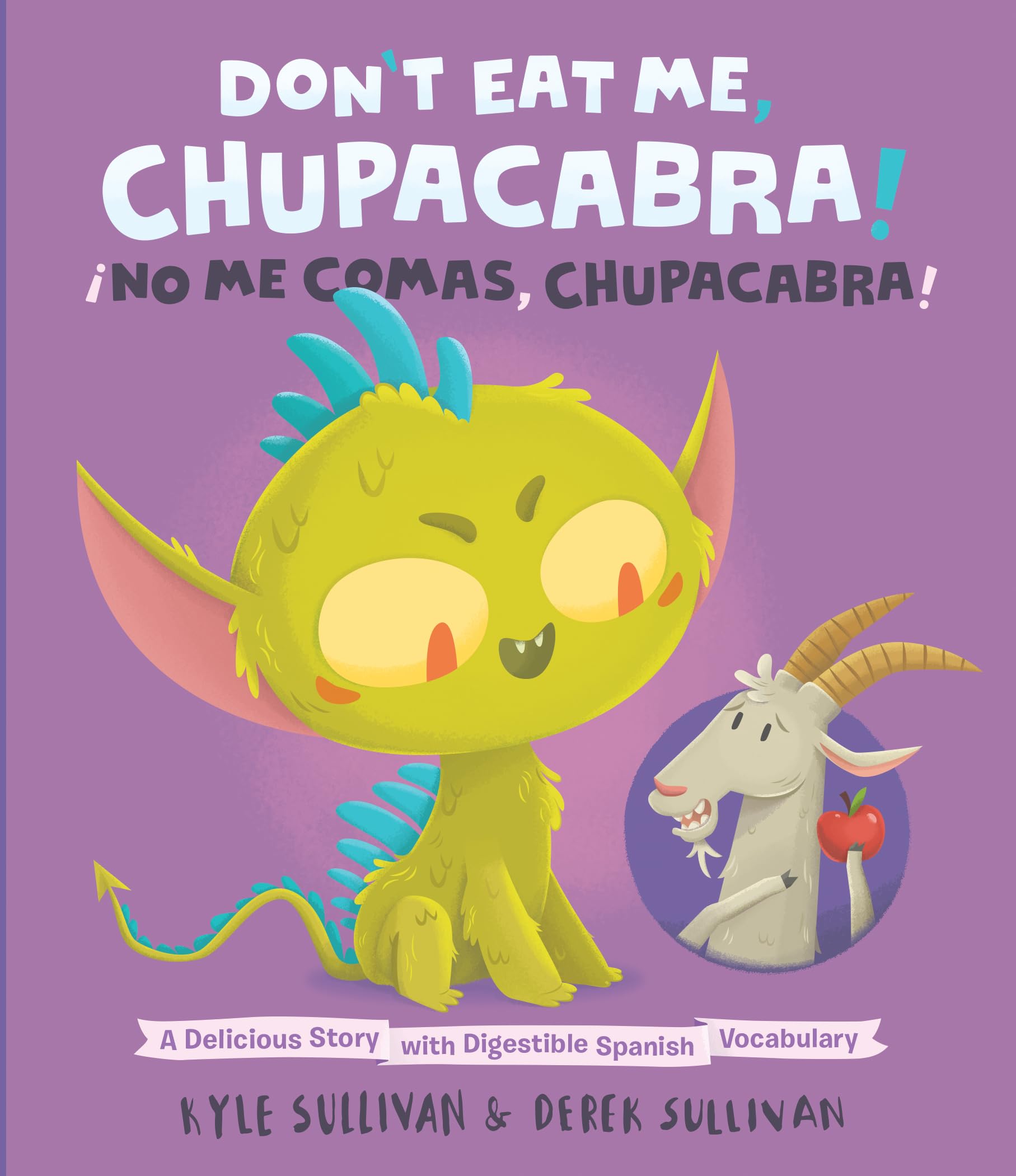
This book is a great pick for families who want a cute story that gently teaches Spanish and English.
Pros
- The story mixes English and Spanish in a way that’s easy to follow.
- Bright, funny artwork keeps little ones engaged.
- Sturdy construction with thick, sizable pages.
Cons
- Heavier and chunkier than other board books, making it tricky to hold with one hand.
- The story is short and simple, which may not satisfy older toddlers.
- Some food scenes could make picky eaters giggle or wrinkle their noses.
We read Don’t Eat Me, Chupacabra! and had lots of giggles. The playful language helps us introduce Spanish words naturally.
Kids enjoy the story and start repeating vocabulary after a few reads. Turning through the thick pages is easy, and we don’t worry about tearing.
The illustrations add fun, mixing a silly monster with food swaps. We laugh with the kids, especially at the goat’s wild meal ideas.
The chunky size makes it harder to hold while carrying a baby. Despite that, it’s a favorite at bedtime because it’s quick to read and full of personality. This book does a great job bringing Spanish and English into our storytime routine.
Buying Guide
When we choose board books in multiple languages, we want sturdy books. Babies often grab and chew their books, so thick, strong pages last longer and are much safer.
We should look for clear, bright pictures. Babies respond best to simple, colorful images.
Real photos can help with word learning. It’s good to check that the translation is accurate and easy to understand.
A poor translation can confuse readers. We can compare the text in both languages to see if it matches closely.
Books that use both languages side by side help us read along and teach words more easily. Some books put one language on the top and another on the bottom, or use both on the same page.
Here’s a list of things to look for:
- Durable pages
- Simple, clear images
- Accurate translations
- Dual-language text layout
- Appropriate for baby’s age
We can also use a table to compare some key features:
| Feature | Why It Matters | What to Check |
|---|---|---|
| Page Thickness | Hard to rip or chew | Thick, board pages |
| Image Style | Holds baby’s interest | Simple and colorful |
| Language Placement | Easier learning | Both languages shown clearly |
| Translation Quality | Accurate word teaching | Easy, trustworthy wording |
| Age Suitability | Matches baby’s development | Target age on the cover |


