

Helping toddlers learn numbers and letters can be fun and rewarding. Concept books introduce basic ideas like counting and the alphabet at just the right age.
These books use pictures, colors, and simple words to help kids start to recognize numbers and letters. Kids enjoy looking at the bright pages and learning new things.
Books for 2-year-olds need to be sturdy and easy to use. Thick pages make it simple for little hands to turn, and clear, large fonts are easier to read.
Bright colors and interactive parts like flaps or textures keep young kids interested. We always check that the book is safe and free from small, loose parts.
When we pick a concept book for a toddler, we focus on durability and age-appropriateness. We also look for books that are easy for kids to use and enjoy.
We spent hours looking at different number and letter books. Our goal was to find books that make early learning simple and enjoyable.
Best Concept Books for 2-Year-Olds: Numbers and Letters
We know it’s important to help little ones learn their numbers and letters. These books make learning fun and easy for curious 2-year-olds.
Let’s look at our top picks for the best concept books to get kids started.
123 Count with Me

This book is a great pick if we want our kids to get excited about numbers while building early writing skills.
Pros
- Sturdy pages handle lots of use and rough little hands
- Grooved numbers make tracing and learning fun
- Each number has matching pictures for easy counting
Cons
- Some doors can be tricky for tiny fingers to open
- It only covers numbers, not letters
- It might be too simple for kids who already know how to count
We noticed right away that 123 Count with Me is built to last. The thick board book holds up well when kids flip the pages or poke at the little doors.
This makes it easy for us to let them explore without worrying about rips or tears. The grooves for tracing numbers are a favorite feature in our home.
Our toddler loves running her finger along each raised outline. She feels like she’s playing a game as she learns the shapes.
The pictures that match each number give us a clear way to talk about counting objects. This helps us teach counting in a simple way.
This book focuses just on numbers, so we still need something else for letters. Some of the little flip doors are a challenge for tiny hands, but with us nearby, it turns into a fun activity.
Kids who already know their numbers might not find it as engaging. For two-year-olds just starting out, it’s just right.
If we want a book that’s hands-on and easy for toddlers to use by themselves, 123 Count with Me stands out for quality and the way it keeps early learners interested.
My First Toddler Coloring Book

If we want our toddlers to have fun while learning numbers and letters, this coloring book is a simple way to get started.
Pros
- Thick pages stand up to rough toddler handling
- Bright, large images are easy for new learners to color
- Covers several first concepts in one book
Cons
- Some toddlers may finish the book quickly
- Not every page focuses just on numbers and letters
- Spiral binding isn’t included in every version
We found the book’s sturdy pages prevent most marker bleed-through. This is great for little hands that press hard or use a lot of color.
The illustrations are simple and engaging. There’s plenty of room on each page, making it less stressful for toddlers who are just starting to color inside the lines.
The book moves from numbers to letters to shapes and colors. Kids enjoy flipping through and picking what interests them most that day.
It’s easy to use together as a family. The book fits well in a diaper bag or backpack.
While the variety is nice, sometimes we wish there were more pages that focus just on numbers and letters. My First Toddler Coloring Book is a solid choice for anyone wanting something educational and enjoyable for little ones.
HIDEWING Preschool Learning Workbook

If we want a book that makes learning numbers and letters fun and hands-on for two-year-olds, this workbook is a strong pick.
Pros
- Many activities keep kids busy and interested
- Erasable pages allow us to reuse it over and over
- Covers a wide range of early learning topics
Cons
- Markers can sometimes stain the pages
- The workbook is a bit large for carrying around
- Some activities are better for ages three and up
We enjoyed the interactive and varied pages. Kids can trace letters, count, match shapes, and color, all in one book.
The dynamic tracing pages really helped with hand control. Little ones stayed engaged and wanted to try more.
Using erasable markers is handy since mistakes are easily wiped away. Kids can practice as much as they want without worrying about running out of room.
Some pages are more advanced, so not every activity is perfect for younger twos. Even so, having a mix of skills in one book is great as our children learn.
For families or classrooms, the HIDEWING Preschool Learning Workbook feels more like playtime together.
Scholastic Toddler Jumbo Workbook
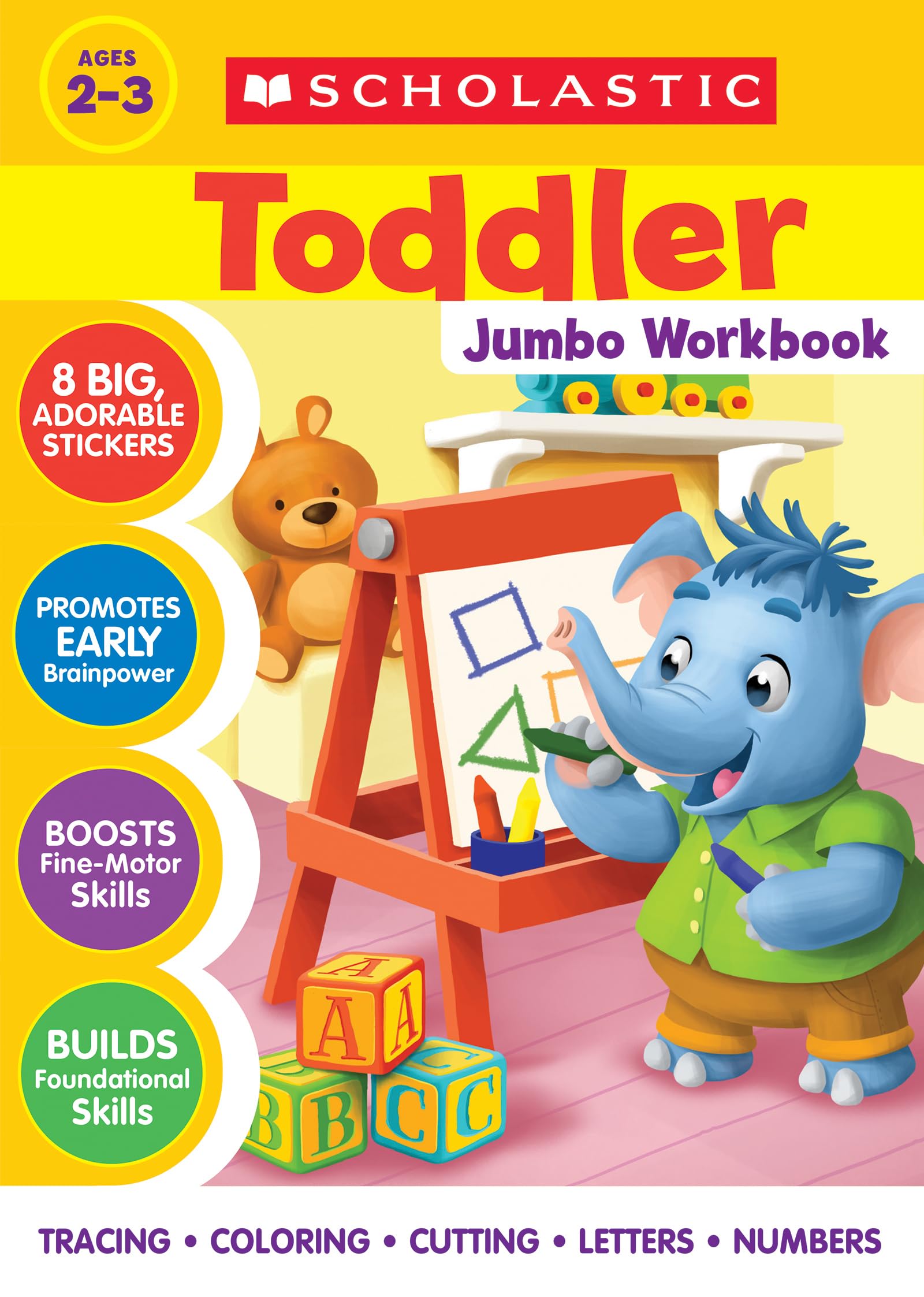
This workbook is a solid choice for parents who want to help their toddlers get a head start on numbers and letters.
Pros
- Pages are thick and hold up well to eager hands
- Covers lots of topics, from counting to letters and tracing
- Loads of activities keep little ones entertained
Cons
- The book is heavy and not easy for young kids to carry
- Some activities are a bit challenging for younger toddlers
- No wipe-clean pages for repeated use
We found the Scholastic Toddler Jumbo Workbook packed with fun activities. Kids can learn about shapes, letters, numbers, and colors in a simple way.
The variety helps keep our kids interested, whether they’re coloring or tracing. The thick paper lets us use crayons and markers without worry.
With over 300 pages, there’s no shortage of things to do. We liked having this book for road trips or downtime at a restaurant.
A few pages felt a little hard for our younger ones, but that means it will last through several stages. While we wish pages were reusable, the amount of content still feels worth it.
School Zone Numbers Flash Cards

These are a solid pick if we want to help our toddlers learn numbers in a fun way without adding extra stress.
Pros
- Cards feel sturdy and fit well in small hands
- The colorful pictures hold kids’ attention
- Both numbers and quantities are easy to match up
Cons
- Only covers numbers, not letters
- Some of the pictures might be a bit distracting
- Packaging varies and sometimes isn’t easy to open
We noticed right away that the School Zone Numbers Flash Cards are simple to use and very visually appealing. The cards are thick, so our kids didn’t bend them as quickly as some of the flimsier sets we’ve used in the past.
Each card has a big, easy-to-read number on one side and the correct amount of objects on the other. Our little ones enjoyed playing “matching” games on the floor.
They liked counting the images and flipping the cards over to check their answers. We like that these cards make learning feel like play.
The cards are easy to keep together and clean up when our toddlers are finished. It would be great if there were some letter cards, but for numbers, these flash cards deliver.
While some of the art is a bit busy for very young kids, our children didn’t seem put off by it. If we want something simple, colorful, and strong enough to survive lots of use, this is a good set to add to our shelf.
Buying Guide
When you pick books about numbers and letters for 2-year-olds, check for sturdy construction. Board books work well because they handle rough use and drool.
Choose books with simple, clear pictures and bold colors. Bright images and big letters hold a child’s attention.
Look for interactive features that make learning fun. Books with flaps to lift, textures to feel, or buttons to press keep kids engaged.
Key Features to Consider
| Feature | Why It Matters |
|---|---|
| Sturdy Materials | Prevents damage from drops and bites |
| Large Text | Makes letters and numbers easy to see |
| Simple Illustrations | Reduces confusion for young children |
| Interactive Elements | Encourages engagement and play |
| Non-toxic Materials | Safe for mouthing and handling |
Books that use familiar objects like animals or toys help show numbers and letters. This approach makes learning feel like play.
Check the language in each book. Simple words and short sentences help little ones connect spoken and written words.
Pay attention to the size and weight of the book. Lightweight and small books are easier for toddlers to carry and hold.
Pick books you can read in just a few minutes. Quick stories or counting sessions match short attention spans.


